Last updated: September 2026
If you've tried to send USDT on Tron and got hit with a "insufficient energy" error, or watched about 6.5 TRX vanish for a simple transfer, you've run into the energy problem.
Tron energy isn't intuitive. The blockchain works differently than Ethereum or Bitcoin, and the documentation assumes you already know what's happening. This guide explains what energy actually is, why you need it, and what to do about it.
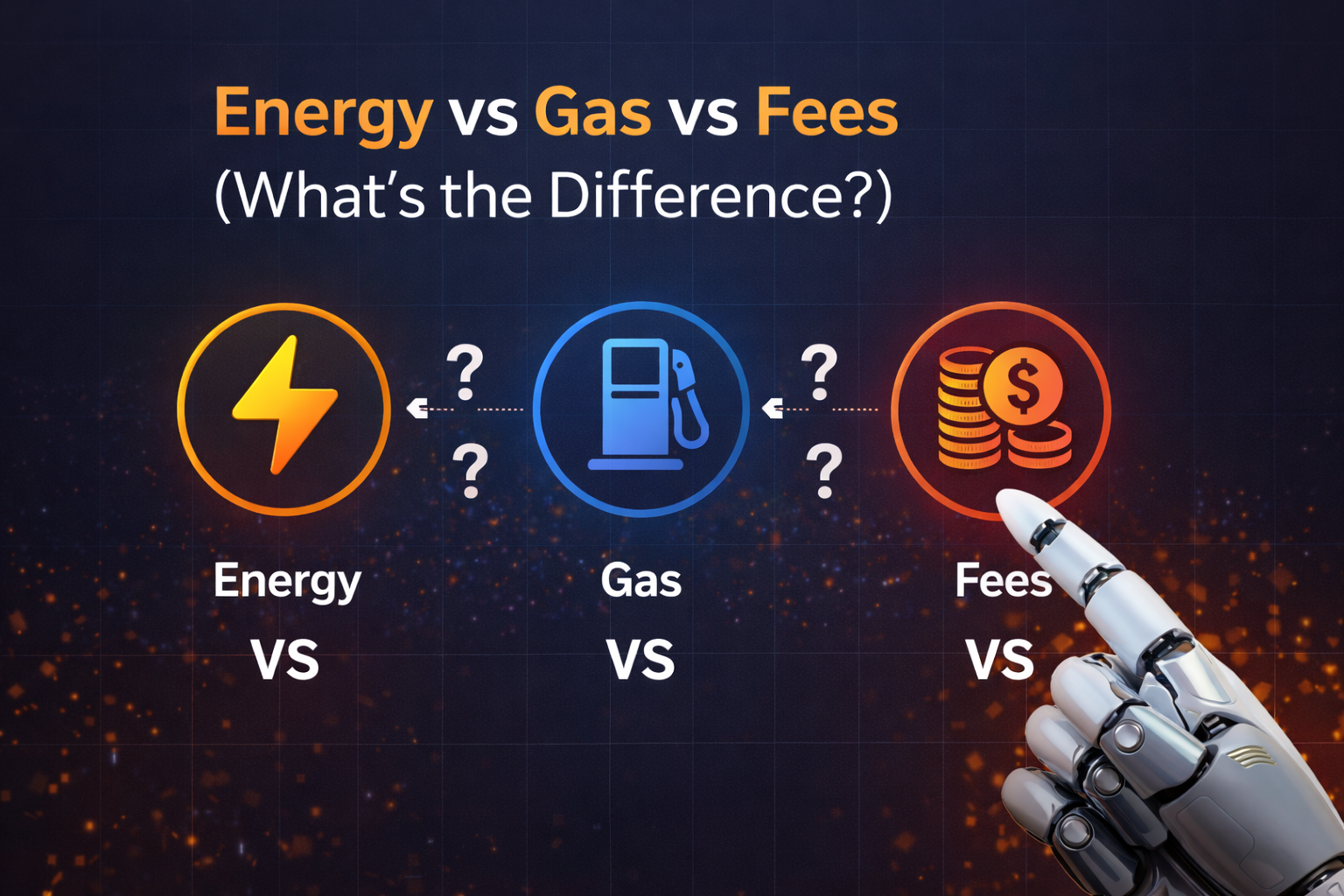
Energy vs Gas vs Fees (What's the Difference?)
On Ethereum, you pay gas fees in ETH for every transaction. Simple concept: do something, pay for it.
Tron works differently. Instead of paying fees directly, you use computational resources called "energy" to execute smart contracts. If you don't have energy, the network burns TRX as a substitute.
Quick comparison:
- Ethereum: Every transaction costs ETH (unavoidable)
- Tron TRX transfers: Free, uses "bandwidth" (everyone gets this)
- Tron USDT transfers: Costs energy (or burns TRX if you don't have energy)
The confusing part is that USDT transfers look like regular transfers in your wallet, but they're actually smart contract executions. That's why they need energy.
What Energy Actually Does?
When you send USDT on Tron, you're not moving coins directly. You're calling a function on the USDT smart contract that updates two balances: yours goes down, the recipient's goes up.
That contract execution requires computational work. Energy is the measurement of how much computation you're using.
Think of it like this:
- Bandwidth = postage stamp (moving data around)
- Energy = electricity (running calculations)
Sending TRX is like mailing a letter, you just need postage (bandwidth).
Sending USDT is like running a program, you need electricity (energy).
Everyone gets free bandwidth daily. Nobody gets free energy. That's why USDT transfers cost something and TRX transfers don't.
How Much Energy Do You Actually Need?
For a transfer to a wallet that already holds USDT: about 65,000 energy. For a transfer to a new or zero-USDT wallet, including exchange deposit addresses: about 131,000 energy.
That difference comes down to:
- Whether the receiving address has held USDT before (new addresses roughly double the cost)
- Network congestion
- What else the contract needs to do
Most people rent exactly one of those two amounts depending on the destination, with a small buffer on top. Better to have energy leftover than to be short and burn TRX.
3 Ways to Get Energy
Option 1: Stake TRX
You freeze (lock up) TRX in your wallet to receive energy. The exchange rate fluctuates, but roughly:
- 1 TRX staked = roughly 1,000-1,400 energy per day
- For 65,000 energy = stake roughly 46-65 TRX
Pros: One-time setup, energy regenerates daily
Cons: TRX is locked for 3 days minimum, opportunity cost
This makes sense if you make USDT transfers daily and don't mind locking up capital.
Option 2: Rent energy
Pay someone to delegate their staked energy to you temporarily (usually 1 hour).
- Cost: 3 TRX for 65,000 energy (6 TRX for 131,000 energy to a new wallet)
- Delivery: Instant
- Duration: 1 hour
Pros: Cheap, no lockup, instant
Cons: Expires in 1 hour, need to rent again for future transfers
This makes sense for occasional USDT transfers or when you need energy right now.
Option 3: Do nothing (burn TRX)
If you have zero energy and try to send USDT, Tron automatically burns TRX from your wallet to cover the cost.
- Cost: about 6.5 TRX per transfer (about 13 TRX to a new or zero-USDT wallet)
- Pros: Nothing to set up
- Cons: Expensive, TRX is permanently destroyed
This is what happens by default if you don't plan ahead. Most people do this once, get surprised by the cost, then figure out energy rental.
Real Numbers: What It Actually Costs…
Let's say you're sending 100 USDT to an exchange.
| Method | Cost | Details |
|---|---|---|
| Burning TRX (no energy) | about 13 TRX | Transaction completes, 13 TRX gone forever |
| Renting energy with EezyTron | 6 TRX | Transaction completes, saved over 50% |
| With staked TRX | One-time stake sized to your transfer | Energy regenerates daily, free transfers going forward (as long as TRX stays staked), Opportunity cost: TRX locked up |
For one transfer, renting wins. For daily transfers, staking wins. For occasional transfers, renting still wins because your TRX isn't locked.
Why This System Exists
Tron's model is designed to prevent spam. Instead of making every transaction expensive (like Ethereum), Tron makes it free if you're invested in the network (staking) or willing to pay a small rental fee.
The theory: legitimate users stake TRX and get free transactions. Spammers would need to buy massive amounts of TRX to spam, making it prohibitively expensive.
In practice: most people just rent energy for USDT transfers and call it a day.
Common Confusion Points
"I have TRX but my transfer failed"
Having TRX in your wallet doesn't give you energy. You need to either stake that TRX (lock it up) or rent energy separately. Just holding TRX doesn't help.
"My wallet says I have bandwidth but no energy"
Bandwidth ≠ Energy. Bandwidth is for simple TRX transfers. Energy is for smart contracts like USDT. Different resources.
"Energy expired but I didn't use it"
Rented energy only lasts 1 hour. If you rent energy but don't make your transfer within that window, it expires unused. Plan ahead.
"How much TRX do I need in my wallet?"
- For the actual USDT transfer: zero TRX (USDT transfers don't consume TRX, they consume energy)
- For renting energy: 3 TRX (6 TRX for a new wallet)
- For safety buffer: Keep 5-10 TRX in case you need to burn some
"Do I need energy for every transfer?"
Yes. Every USDT transfer requires energy. If you're making 5 transfers, you need energy for all 5. Either rent 325,000 energy at once (5 × 65,000), or rent 65,000 energy five separate times.
When Staking Makes Sense…
Staking TRX for energy is worth it if:
- You make USDT transfers at least 3-4 times per week
- You don't mind locking up a meaningful amount of TRX
- You're okay with a 3-day unstaking period
The math: if you transfer USDT daily, renting each time adds up fast. Staking once can give you energy forever (or until you unstake), and the breakeven point depends on your transfer volume and current network staking conditions.
But most people don't make that many transfers. For occasional use, renting is simpler and cheaper overall because your capital isn't locked.
When Energy Isn't Enough🤔
Sometimes you'll rent energy and the transaction still fails. This usually means:
Wrong wallet type
Some exchanges or contract wallets have special requirements. They might need meaningfully more than the standard 65,000/131,000. Check with the receiving platform.
Fee limit set too low
Your wallet has a "fee limit" setting. If the transaction would cost more than this limit, it fails before executing. Check your wallet settings.
Contract is paused
Rare, but sometimes the USDT contract itself has issues. Check if other people can send USDT on block explorers.
Network congestion
During extreme congestion, energy costs can spike temporarily. Add more buffer than the standard 65,000/131,000.
Other TRC-20 Tokens
This whole energy system applies to all TRC-20 tokens, not just USDT:
- USDC transfers: a similar range to USDT
- TUSD transfers: a similar range to USDT
- Random tokens: can vary widely, depending on contract quality
USDT is the most optimized major token. Some poorly coded tokens require significantly more energy.
Energy Regeneration Explained
If you stake TRX for energy, the energy regenerates on a 24-hour cycle.
Example: You stake enough TRX for 65,000 energy capacity. You use all 65,000 for a transfer at 2pm. By 2pm the next day, that 65,000 energy is back. Your total capacity stays the same, but the used portion refills.
This is why staking works for regular users—you get a daily allowance of free transfers.
Rented energy doesn't regenerate. It's one-time use that expires in 1 hour.
Should You Care About Bandwidth?
Not really. Everyone gets 5,000 bandwidth points daily for free, and a TRX transfer uses about 250 points. Unless you're making 20+ TRX transfers per day, you'll never run out of bandwidth.
Bandwidth is only relevant for TRX-only users. If you're dealing with USDT or other tokens, energy is what matters.
The Bottom Line
Tron energy is a resource required to execute smart contracts like USDT transfers. Without it, your wallet burns TRX automatically (expensive). With it, transfers are cheap.
For most people:
- Making 1-3 USDT transfers per month: rent energy each time (3 TRX per transfer, 6 TRX to a new wallet)
- Making weekly USDT transfers: still rent, but consider staking if it becomes more frequent
- Making daily USDT transfers: stake TRX for ongoing energy
The system is confusing at first, but once you understand that "USDT transfer = need energy," it's straightforward. Check your energy balance before sending USDT, rent if needed, transfer completes smoothly.
Quick reference:
- USDT transfer = needs about 65,000 energy (about 131,000 to a new wallet)
- Rent energy = 3 TRX per transfer (6 TRX to a new wallet)
- Stake TRX = one-time lockup, energy regenerates daily
- No energy = wallet burns about 6.5-13 TRX automatically